So here's the thing: your users are probably already tracking moon phases somewhere.
Co-Star has 30 million users. The Pattern gets people to stay 2-4x longer than regular horoscope apps. Moon journals are selling out on Amazon. "Lunar Living" went from niche astrology concept to wellness mainstream.
And developers are starting to notice.
TL;DR
"Lunar Living" is the practice of syncing daily activities with moon phases - starting projects at new moons, resting during waning moons, being mindful during full moons. People have done this for thousands of years. Now they want apps that help them do it.
What is Lunar Living, Really?
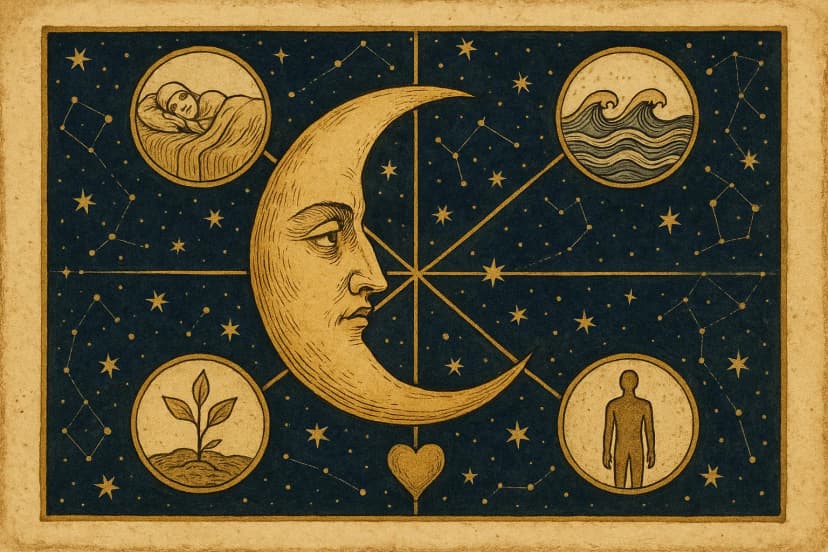
Lunar Living means matching your activities to the moon's 28-day cycle. Each phase has different energy, and people plan their lives around it.
This sounds mystical, but the practice is surprisingly practical. Here's what each phase means to your users:
| Phase | Energy | What Users Actually Do |
|---|---|---|
| New Moon | Fresh start, intention | Set goals, start new projects, plant seeds (literally and figuratively) |
| Waxing Moon | Building, momentum | Take action, learn new things, build habits, go on dates |
| Full Moon | Peak, culmination | Make big decisions, celebrate wins, but also manage heightened emotions |
| Waning Moon | Release, reflect | Declutter (home, relationships, mind), rest, analyze what worked |
The interesting part for developers: people who follow lunar cycles are deeply engaged users. They open apps daily to check moon phases. They want notifications before phase changes. They track patterns over months or years.
This isn't casual usage - it's ritualistic. And rituals create retention.
A note on why I take lunar stuff more seriously than other astrologyLook, I'm a developer. I like things I can measure. And here's what's interesting about the Moon specifically: it's not about distant stars whose gravitational influence is effectively zero at Earth. The Moon is right there - 384,000 km away, massive enough to move oceans twice a day.
Tides aren't mystical. They're physics. The same gravitational force that creates a 12-meter tidal range in the Bay of Fundy is pulling on every body of water on Earth - including the 60% of water in your body.
Do I think Mercury retrograde affects your email? Honestly, mostly not. But do I think the Moon - the celestial body with the strongest gravitational influence on Earth after the Sun - might affect biological rhythms, sleep patterns, emotional states? That's not astrology. That's a reasonable hypothesis with actual physics behind it.
The lunar living crowd might use mystical language, but they're tracking something real. And that makes building for them more interesting than building for generic horoscope consumers.
— Oleg
Why Should Developers Care?
Three reasons.
The Four Things Users Want from Lunar Apps
After talking to people who follow lunar living, we found they want four types of information:
1. "What's the moon doing right now?"
This is basic but essential. Users want to know:
- Current phase (new, waxing, full, waning)
- What sign the moon is in (affects the "flavor" of the energy)
- Void of Course periods (when the moon makes no aspects - traditionally a time to avoid starting new things)
- Upcoming phase changes
2. "What does this moon mean for ME?"
Here's where it gets personal.
A lunar return is the moment the moon returns to the exact position it was when you were born. This happens roughly once a month and creates a kind of personal "month ahead" forecast.
This is different from generic horoscopes (same advice for millions of people with same sun sign). Lunar returns are calculated specifically for each person based on their exact birth data.
3. "What's my relationship with the moon?"
Your sun sign is your public personality. Your moon sign is your emotional core - how you feel, what you need to feel safe, how you process difficult emotions.
For lunar living, moon sign is foundational. A Cancer moon person experiences full moons completely differently than a Capricorn moon person. Same lunar event, very different internal experience.
4. "What should I actually DO?"
Raw data is interesting, but users want guidance. "The moon is in Scorpio" is information. "Today is good for deep conversations but you might feel more sensitive than usual - journal before reacting" is actionable advice.
How These Work Together
Here's the architecture for a typical lunar living app:
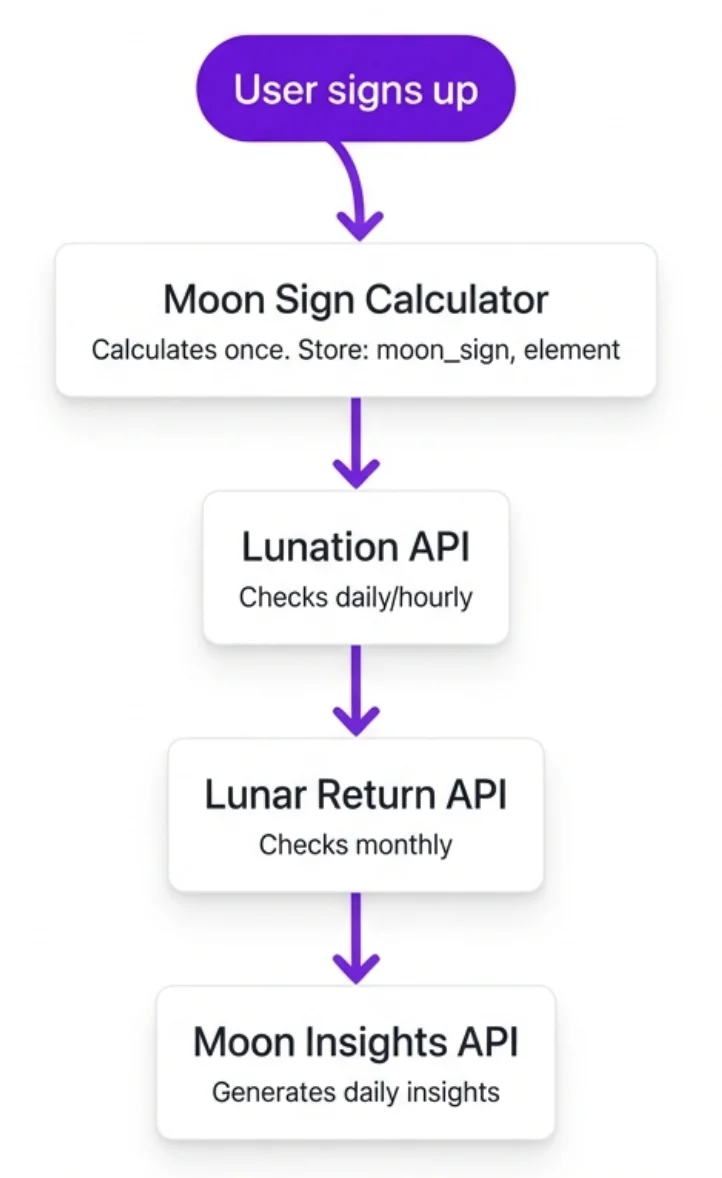
The key insight: moon sign data is calculated once and stored forever (birth data doesn't change). Lunar return is calculated monthly. Current phase can be cached for hours. Only the personalized insights need to be generated frequently.
This means lunar features are cheap to run at scale.
What Can You Actually Build?
Wellness & Meditation Apps
Moon phases map naturally to different types of inner work:
- New Moon: Intention-setting meditations, goal visualizations
- Waxing Moon: Energy-building practices, active meditations
- Full Moon: Emotional processing, gratitude practices, release work
- Waning Moon: Letting-go meditations, reflection, rest-focused content
The app could automatically surface phase-appropriate content, send notifications before phase changes ("New moon in 3 hours - perfect time to set intentions"), and help users track patterns over multiple cycles.
Dating & Social Apps
Moon sign compatibility is actually useful for emotional matching. Fire moons (Aries, Leo, Sagittarius) and air moons (Gemini, Libra, Aquarius) tend to get each other's energy. Earth moons (Taurus, Virgo, Capricorn) and water moons (Cancer, Scorpio, Pisces) often find emotional understanding easier.
This isn't about "will they be a good couple" - it's about "will they understand each other's emotional language."
Dating apps can show moon sign compatibility, surface "moon twins" (same moon sign), or just give users language to understand their own emotional needs.
Productivity & Planning Tools
Some people genuinely plan their work around lunar phases. The logic:
- Start projects at new moon (fresh energy, new beginnings)
- Push hard during waxing moon (building momentum)
- Launch/ship at full moon (peak visibility)
- Review and reflect during waning moon (integration)
- Avoid starting important things during VOC (traditional advice)
Whether this "works" is beside the point - if your users believe it helps them, the feature is valuable. And the structure of the lunar cycle (new → build → peak → release → new) is genuinely a useful framework for thinking about project phases.
Journaling Apps
Moon journaling is a whole category. Users track their mood, energy, and events alongside lunar phases, looking for patterns. "Do I always feel more anxious at full moons?" "Are waning moons when I get sick?"
Auto-tagging entries with moon phase data lets users discover these patterns without manual tracking.
The Developer Challenges
Building lunar features isn't hard, but there are a few things to think about:
Quick Comparison: What's Out There
Most moon phase APIs just tell you the current phase. Here's what's different about building with a full lunar living stack:
| What users want | Basic moon API | Full lunar stack |
|---|---|---|
| "What phase is it?" | Yes | Yes |
| "When's the next full moon?" | Usually | Yes |
| "Is it Void of Course?" | No | Yes |
| "What's my moon sign?" | No | Yes |
| "What does this month mean for ME?" | No | Yes (lunar return) |
| "What should I do today?" | No | Yes (AI insights) |
| Vedic/Chinese systems | No | Yes |
If you just need phase data, there are free options. If you're building actual lunar living features, you need the personal calculation layer.
FAQ
Lunation tells you what the moon is doing right now (phase, sign, VOC). Lunar Return tells you what this lunar month means for a specific person based on their birth chart.
No. Start with Lunation for basic phase tracking. Add Moon Sign Calculator if you need personality data. Add Lunar Return for monthly forecasts. Add Moon Insights if you want AI-generated guidance.
Moon sign requires birth time. For users without it, you can still show them lunar phase data (Lunation API) and general moon sign descriptions (without their specific sign). Or encourage them to contact relatives or check birth certificates.
Co-Star has 30 million users. Moon journals are a product category on Amazon. Lunar living content gets billions of views on TikTok. It's mainstream for the wellness/astrology-curious demographic.
Lunar features are opt-in. Users who want them get them. Users who don't, don't have to engage. But even skeptical users often enjoy the structure of the lunar cycle as a planning framework.
Getting Started
The simplest path:
- Add the Lunation API to surface current phase and upcoming changes
- If that resonates with users, add Moon Sign Calculator for personalization
- Build up to lunar returns and AI insights as your lunar features mature
Free tier gives you 50 requests/month - enough to prototype. Most apps in development use Professional tier ($37/month for 55,000 requests).