An electional consultation runs $300-$800. The astrologer spends 1-4 hours checking candidate moments by hand: Is Venus retrograde? Is the Moon void of course? What sign is rising? What about eclipses?
Nobody else has built this. We checked.
What is electional astrology?
Electional astrology is picking the right time to start something. A wedding. A business. A surgery. A contract signing.
Professional astrologers have done this work manually for centuries. They cast charts for hundreds of possible moments, weigh dozens of factors, and narrow it down. It works. It's also slow and expensive.
The problem: desktop software from the 1990s
The tools electional astrologers use today are old. Solar Fire runs on Windows. Janus 6 looks like it was built when Clinton was president. Neither has an API. Neither scores anything. You get a chart, and you interpret it yourself.
Web tools like Astro-Seek give you a basic electional search, but it caps at 90 days, uses a black-box scoring system, and doesn't explain its results. You can't export anything. You can't integrate it.
If you're a developer building an astrology app, a wedding planning platform, or an AI agent that answers "when should I launch my business?" you have nothing to call.
We checked every astrology API. None has electional scoring.
This isn't speculation. We pulled OpenAPI specs, tested endpoints, and read documentation for every significant astrology API provider. Here's what we found:
| Provider | Electional Scoring? | What they actually offer |
|---|---|---|
| Solar Fire (desktop) | Boolean only | No API at all. Windows app. |
| Janus 6 (desktop) | Boolean only | No API at all. Windows app. |
| AstroApp | No | 10 REST endpoints, but electional is GUI-only |
| Prokerala | No | Vedic Choghadiya: binary Auspicious/Inauspicious |
| AstrologyAPI.com | No | Vedic muhurta: binary classification |
| KundliAPI | No | 9 Vedic date endpoints. Returns flat date lists, no scores |
| VedicRishi | No | White-label of AstrologyAPI.com |
Zero Western electional scoring APIs. The Vedic stack does muhurta, but that's a different system (sidereal zodiac, different criteria). And even the Vedic APIs return binary yes/no answers or unscored date lists.
The market is empty.
What does the Electional API actually do?
Three endpoints:
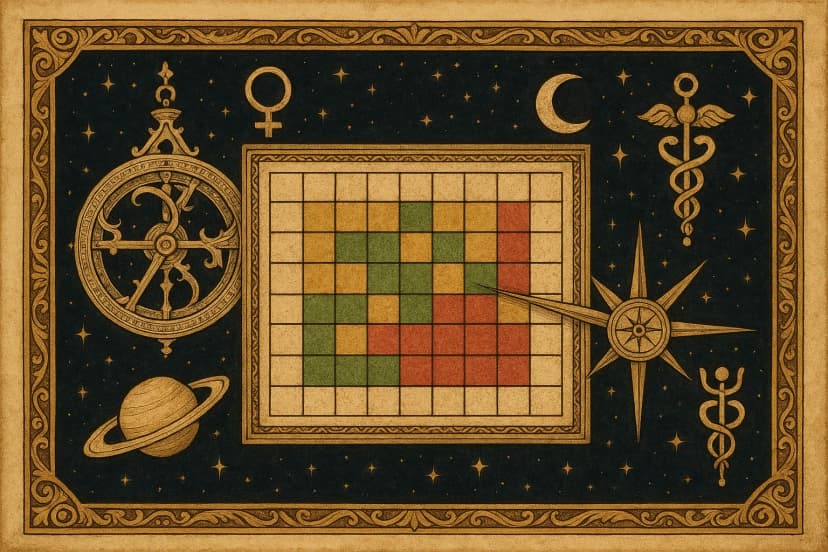
POST /api/v3/electional/search is the main one. Send an activity type and a date range (up to 367 days). You get back:- A calendar heatmap with color-graded day scores
- Ranked top windows with individual 0-100 scores
- Excluded date ranges (eclipses, retrogrades) with explanations
- Natural language rationale per window
POST /api/v3/electional/evaluate scores a single moment. "Is July 15th at 2pm good for my wedding?" You get a score, factor breakdown, and cautions.GET /api/v3/electional/glossary/activities returns all 12 supported activities with synonyms. Built for LLM intent matching and UI dropdowns.How does the scoring engine work?
Think of it like a weighted rubric. Each activity preset defines 31 factors with individual weights that sum to 100. For every candidate moment, each factor evaluator returns:
- A satisfaction score (0.0 to 1.0)
- An observation ("Moon in Cancer, domicile")
- A contribution to the final score
These raw values pass through saturation curves before weighted aggregation into the final 0-100 score. It's like grading a test where different questions have different point values.
Separately, 23 hard-stop checkers look for deal-breakers: eclipses, retrograde planets, void-of-course Moon, combust planets. A hard-stopped moment gets excluded entirely, with an explanation.
Here's the part professional astrologers care about: every recommendation comes with receipts. You can see exactly which factors pushed the score up and which dragged it down. Good luck getting that from Solar Fire.
How do you pick the best wedding date with astrology?
Wedding timing is the most common electional use case. Here's a real API request:
1{2 "activity": "wedding",3 "date_range": {4 "start_date": {"year": 2026, "month": 6, "day": 1},5 "end_date": {"year": 2026, "month": 8, "day": 31}6 },7 "location": {8 "year": 2026, "month": 6, "day": 1, "hour": 12, "minute": 0,9 "city": "New York", "country_code": "US"10 },11 "natal_chart": {12 "name": "Anna",13 "birth_data": {14 "year": 1990, "month": 7, "day": 15, "hour": 14, "minute": 30,15 "city": "New York", "country_code": "US"16 }17 },18 "filters": {19 "hours_from": 9,20 "hours_to": 21,21 "days_of_week": ["fri", "sat", "sun"]22 },23 "top_n_windows": 1024}The wedding preset automatically handles:
- Venus retrograde: hard stop. No wedding dates during Venus Rx.
- Void-of-course Moon: excluded. The Moon must be applying to aspects.
- Eclipses: excluded with asymmetric windows (solar eclipses get wider exclusion than lunar), with dates sourced from NASA's Eclipse Catalog.
- Saturn return advisory: if the natal chart shows a Saturn return within the search range, you get a personal advisory even when the universal score is high.
The response includes a heatmap showing every day in June through August, ranked windows for the best weekend times, and a natural language rationale. Something like: "Strong Moon in Cancer (domicile), Venus direct in Taurus, no hard stops active. Jupiter trine to natal Venus adds personal support."
Building a wedding planning app? The heatmap is ready to render as a calendar UI. The scored windows are ready to display as a ranked list.
What is the Hippocratic rule for surgery timing?
This one has a safety requirement the API enforces.
body_area parameter when activity is "surgery":1{2 "activity": "surgery",3 "date_range": {4 "start_date": {"year": 2026, "month": 7, "day": 1},5 "end_date": {"year": 2026, "month": 7, "day": 21}6 },7 "location": {8 "year": 2026, "month": 7, "day": 1, "hour": 12, "minute": 0,9 "city": "London", "country_code": "GB"10 },11 "extra_params": { "body_area": "knees" },12 "filters": { "hours_from": 7, "hours_to": 11 },13 "emergency_mode": false14}15 body areas are supported: head, face, neck, throat, arms, chest, heart, stomach, back, kidneys, reproductive, thighs, knees, calves, feet.
body_area for surgery, the API returns a 400 error explaining why it's required. This isn't optional. It's a safety gate.emergency_mode: true. This disables hard stops but attaches mandatory advisory text to every result. The patient needs surgery now, and you need to document that the timing was acknowledged as suboptimal.Does Mercury retrograde actually matter for contracts?
business_launch preset prioritizes:- Mercury conditions (retrograde = hard stop, combust = caution)
- Jupiter aspects for growth
- Moon phase (waxing preferred for new ventures)
- 10th house strength
contracts preset is separate, optimized specifically for signing agreements. It weights Mercury even higher and adds VOC Moon as a hard stop."activity": "business_launch" and a date range. The API knows which factors matter, which are deal-breakers, and how to weight them. The presets encode centuries of electional tradition into JSON weights.All 12 activities: wedding, surgery, business_launch, contracts, real_estate, travel, legal, agriculture, building, investment, creative_launch, relocation.
How do you scan a whole year in under 2 seconds?
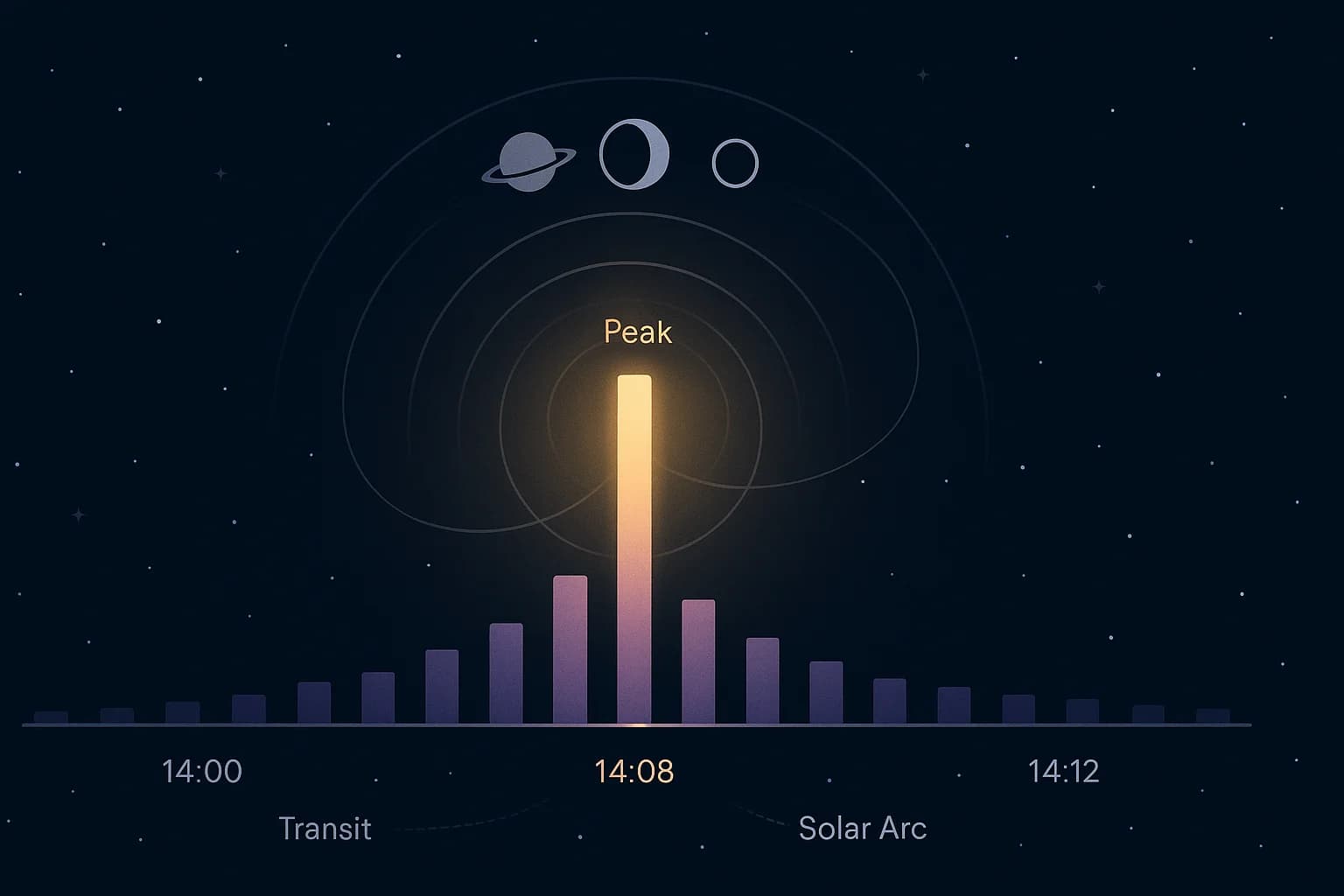
Pass 1 (heatmap): Score every day at noon. This gives a rough day-level grade, enough to identify which days are promising and which are blocked. Fast, because it's one computation per day.
Pass 2 (precision): Take the top N days from the heatmap and drill into each at the requested granularity. Weddings default to 15-minute windows, agriculture uses 1-hour. Score each candidate moment fully.
The results collapse adjacent high-scoring moments into windows with start/end times, durations, and a single representative score. Ties within 1 point go to the earlier window. Deterministic, not random.
Redis cache provides 430x speedup on repeat requests. Same request payload = same cache key = instant response.
Can AI agents call this API?
find_best_time tool that works with Claude, ChatGPT, and custom agents.summary_mode: true and the response shrinks to the top 3 windows with 1-line rationale each. Compact enough for a chat context window./glossary/activities endpoint returns activity IDs with synonyms ("wedding" matches "marriage", "nuptials", "ceremony"). Feed this to an LLM for intent classification: user says "when should I get married?" and the LLM maps it to activity = "wedding".If you're building an AI assistant that answers timing questions, this is the backend.
How much does this cost compared to alternatives?
Desktop electional software costs $129-$299 as a one-time purchase. No API. No export. No scoring.
Professional electional consultations run $300-$800 each. The practitioner spends 1-4 hours.
Our API starts at $11/month for 1,000 requests. A single /search call replaces hours of manual work. The factor breakdown gives practitioners the same data they'd compute by hand. They review and refine instead of calculating from scratch.
Free tier: 50 requests/month. Enough to test every endpoint and preset.
Getting started
Three steps:
- Sign up at astrology-api.io and get your API key
- POST to
/api/v3/electional/searchwith an activity and date range - Render the heatmap and scored windows in your app
The response is structured JSON. Heatmap days have grades. Windows have scores, factors, cautions, and rationale text. Everything you need to build a timing feature, no astrology knowledge required.